By AGENCIES
Issue No. 542
Published on 2004-02-19
Posted on 2004-02-23
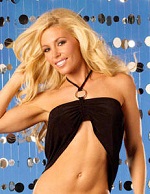
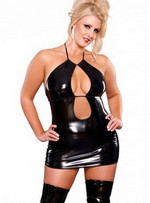
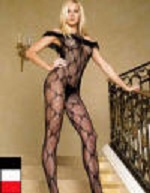
LINGERIE "or ladies private clothing, underwear" has become a full member of the fashion establishment. Pretty or fashionable lingerie is no longer something worn only for special occasions. It has become an everyday staple and women like to update it as often as they update their clothes.
"The industry is very competitive now," says Michael Gazal, the head of the Australian underwear producer Gazal Group. "Everybody's looking for an edge."
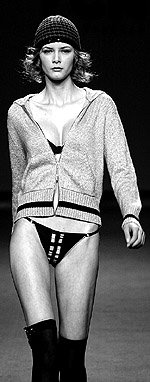
Increasingly, that "edge" is a brand's ability to adapt to the new clothing landscape. Lingerie companies, like fashion houses, design seasonal collections based on themes. Many now use catwalk shows to unveil new collections.
"Things started to change in the mid 1980s," Gazal explains. "Women started to look at lingerie as part of fashion, rather than just a necessity. Now, the people who design lingerie are really fashion designers. They go to a lot of trouble to come up with new fabrics, laces and colours."
Bendon was one of the first companies to produce "fashion lingerie" on a mass scale, with its Elle Macpherson Intimates range, in Australia. That made it accessible to millions of women who previously shied away from the high price tags of premium labels.
"Twenty-five years ago, you had one type of bra you wore all of the time and you only bought a new one when the old one wore out," Sue Dunmore, Bendon's designer explains. "Now you wear a certain bra to play sport, another to the office and a different one out to a club."
Fashion trends not only influence the look of today's lingerie, they have created new categories for the industry. In the past decade in particular, there has been big growth in the number of new styles based on what women wear on the outside.
For example, their love of tight-fitting T-shirts spawned the best-selling (nipple concealing) contour bra. Women's willingness to show their cleavage has resulted in many push-up and padded styles.
Technology, too, has played a major role in the bra wars. As fabric and design developments become more sophisticated, companies are racing to add "exclusive" high-tech features to their products.
But most of the stranger products are being bought by men. They pass up cotton, comfort and elegance and head straight for the tasteless styles. Not really.
US-based market research firm the NPD Group has studied the subject. It found a difference between men and women when it comes to tiny undergarments. "A lot of the women say, with disgust, 'This is what my husband thinks I'm all about?' Or, 'I can't believe you really want me to wear this,'" one NPD researcher says.
Fit and style tips
How to choose lingerie for a gift, how to find your bra size and other important
fashion tips
To our valued customers
 New
lingerie, clothing and accessory items are coming in regularly. If you
want to be among the 1st to look at all the latest additions or if you
want to be among the 1st so grab the best sale items join our
newsletter and we'll keep you updated.
New
lingerie, clothing and accessory items are coming in regularly. If you
want to be among the 1st to look at all the latest additions or if you
want to be among the 1st so grab the best sale items join our
newsletter and we'll keep you updated.
We value your Privacy